
IncludiaTrust Learning · Course 01
Visual & Verbal TLM
Creating Meaningful Teaching–Learning Materials
Teaching materials should do more than decorate a classroom. They should help children notice, question, connect, practise and understand. This course explores how teachers can design and use low-cost, purposeful visual and verbal resources for real learning.
5 chapters · Guided study · Classroom cases · Reflection · Knowledge checks
Explore the five chapters ↓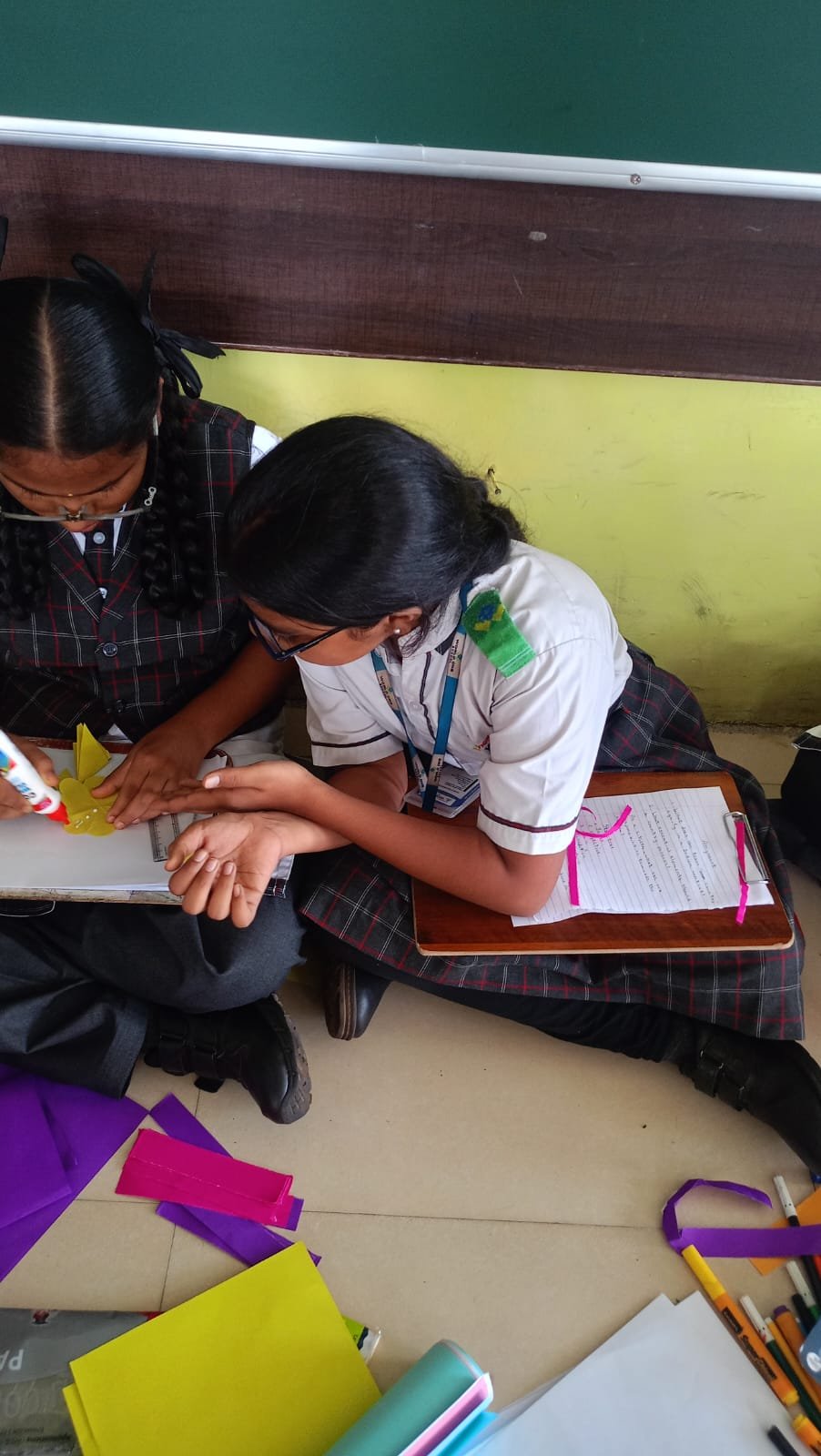
Image source: IncludiaTrust Media Library. Original creator attribution not available in current media record.
Course introduction
Why this course matters
Teachers regularly prepare charts, flashcards, models, worksheets, picture cards, examples and classroom activities. Yet the presence of teaching material does not automatically mean learning has taken place. A resource may look attractive but be difficult to read; it may contain too much information; it may be designed for the teacher’s explanation rather than the learner’s exploration; or it may not connect with children’s everyday experiences.
This course starts from a practical question: How can we choose or create teaching–learning materials that help children understand, rather than simply look at? The intention is not to prescribe one perfect material for every lesson. Instead, it develops a teacher’s ability to identify a learning goal, understand learners, select a resource, use it purposefully, observe what happens and revise the approach.
We will consider classrooms where resources are limited, where children have different language backgrounds, where some learners grasp a concept quickly while others need repetition or concrete examples, and where the teacher must make practical decisions within a real timetable. Low-cost materials can be powerful, but only when the learning purpose is clear. Digital tools may also be useful, but they are not automatically better than locally available resources.
Course outcomes
By the end of this course, you should be able to…
• Explain the purpose of TLM and distinguish it from decoration or classroom display.
• Choose materials based on learning objectives, age, language, prior knowledge and accessibility.
• Make simple resources from paper, reused materials and locally available objects.
• Use storytelling, analogies, questioning, demonstrations and dialogue as verbal learning resources.
• Adapt resources for different learning needs and identify when a material is creating barriers.
• Observe learners’ responses, evaluate effectiveness and make thoughtful improvements.
Course roadmap
Five chapters
Understanding TLM
Meaning, purpose, types, principles, teaching aids versus learning resources, and the difference between engagement and learning.
Designing TLM with Available Resources
Resource mapping, low-cost construction, design choices, safety, durability, planning and making materials for a specific objective.
Verbal TLM & Story-Based Teaching
Storytelling, analogies, oral explanation, dialogue, questioning, language scaffolds, listening and classroom talk.
Inclusive TLM for Diverse Learners
Accessibility, multiple representations, language support, differentiation, adaptation, learner agency and avoiding stigma.
TLM in Practice: Evaluation & Reflection
Classroom trials, observation, evidence of understanding, feedback, redesign and reflective practice.
The chapters will be expanded into in-depth learning modules. This page begins with Chapter 01 and will be updated as the course content is completed.
Chapter 01 · Part 1
Understanding TLM: Beyond Charts, Models & Decoration
1.1 Begin with a learning problem
Imagine a teacher explaining fractions. The board contains the symbols 1/2, 1/3 and 1/4. The teacher describes numerator and denominator, demonstrates how to calculate, and asks learners to solve a few questions. Some learners follow the procedure. Others can copy the steps but cannot explain what one-half represents. A learner may know that the answer is 1/2 without understanding that it describes one of two equal parts of a whole.
The teacher folds a sheet of paper into two equal parts, opens it, then folds it into four equal parts. Learners compare the parts, shade one portion, and discuss why two quarters may represent the same amount as one half. The paper is inexpensive and ordinary. Its value comes from what learners do with it: dividing, comparing, observing, explaining and revising their understanding.
This example illustrates the central idea of teaching–learning material (TLM). A material is not educational simply because it is present in the classroom. Its educational value depends on how it supports a learning purpose. A chart can be a resource, but a chart that is never read, questioned or used may contribute little to the intended learning. An everyday object can become a meaningful resource when learners use it to explore a concept.
Therefore, teachers should not begin by asking, “What chart should I make?” A more productive starting point is, “What should learners understand or be able to do, and what might help them get there?” That question shifts planning from decoration to pedagogy.
1.2 What do we mean by TLM?
Teaching–Learning Materials are resources used to support teaching and learning. They may be physical, visual, auditory, tactile, digital, environmental or activity-based. Examples include picture cards, maps, objects, models, story prompts, audio clips, number counters, diagrams, local artefacts, classroom displays, demonstrations, and worksheets designed for purposeful thinking.
Some materials are primarily used by a teacher to explain or demonstrate; others are intended for learners to manipulate, discuss, investigate or create. The same resource can serve different roles depending on the lesson. A map may be a teacher’s visual aid during explanation, a learning resource when learners locate places independently, or the basis of an activity when groups compare routes and distances. Its role is not fixed by the object alone; it is shaped by the learning task.
It is also helpful to recognise that TLM does not necessarily mean a manufactured product. The school environment, a community member’s knowledge, a local market, a collection of leaves, a newspaper, a classroom conversation or a learner’s experience may become a resource. Teachers should use these resources respectfully and make sure the examples are accurate, safe and relevant.
1.3 TLM is not the same as decoration
Decorative classroom work can create a welcoming environment. Colour, visual organisation, displays of learner work and attractive spaces can communicate that a classroom is cared for. These features matter, but they are not the same as instructional purpose. A display becomes more closely connected to learning when learners use it to retrieve information, compare ideas, explain patterns, refer to vocabulary, track a process or pose questions.
For example, a wall of vocabulary words may be visually attractive. It becomes a more active resource when children are invited to find words during writing, sort them by meaning, connect them to examples, use them in speaking or revise them as their understanding grows. Similarly, a science diagram is more useful when learners label it, explain the arrows, predict what happens next or use it to identify a misconception.
Teachers can ask themselves a simple test: if the resource were removed, what learning opportunity would be lost? If the only answer is “the classroom would look less colourful,” it may be decorative rather than instructional. If learners would lose a visual reference, a way to manipulate information, a scaffold for discussion or a tool to test their thinking, the resource is serving a learning function.
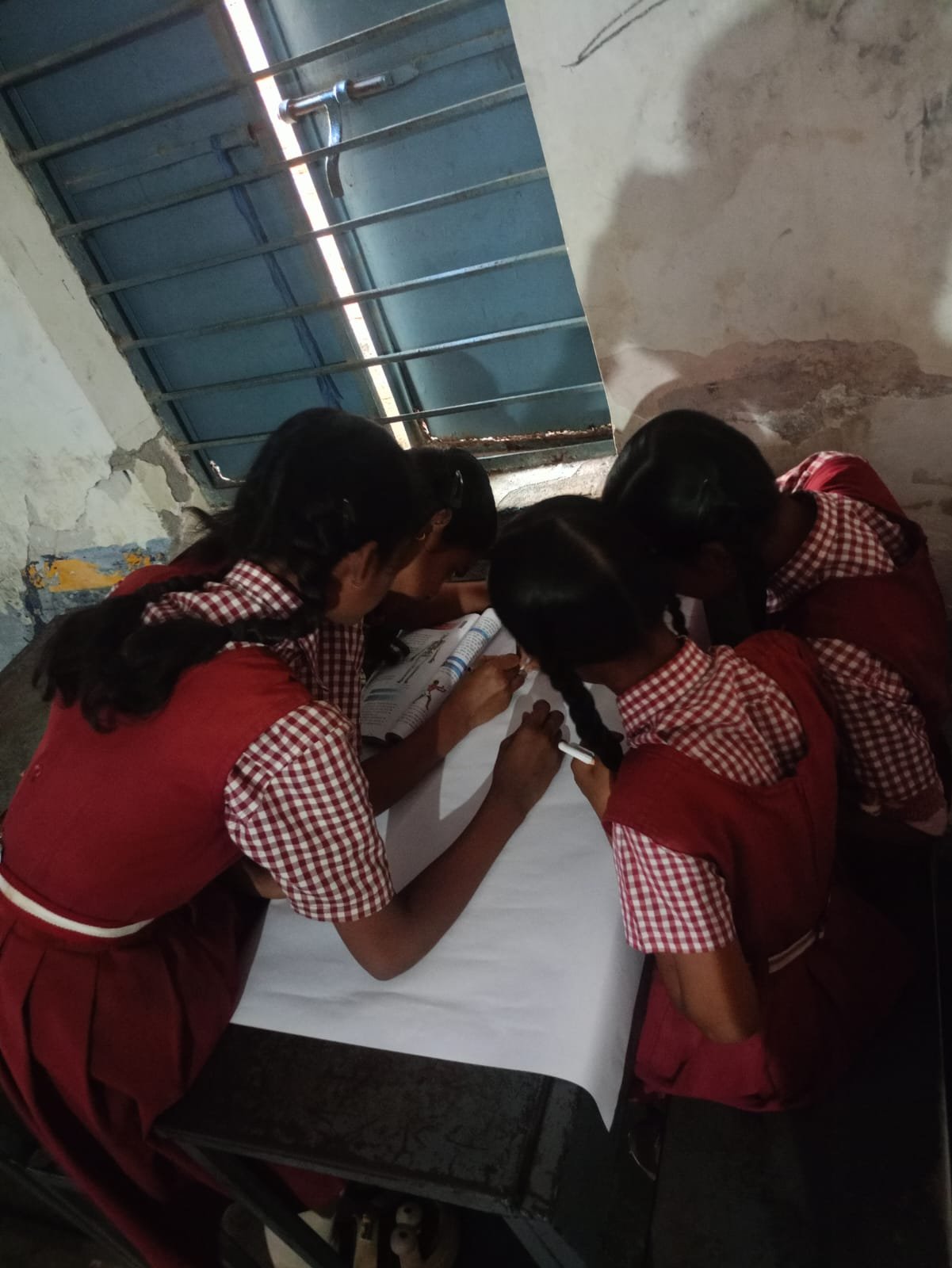
Image source: IncludiaTrust Media Library. Original creator attribution not available in current media record.
1.4 The learning objective comes first
A resource should be selected in relation to what learners are expected to understand. If the goal is to identify parts of a plant, real plants or labelled images may be helpful. If the goal is to compare how plants respond to conditions, observation over time may be more useful than a single chart. If learners are expected to explain a process, the teacher may need to design a sequence of questions and a representation that makes relationships visible.
Before preparing material, write the learning objective in observable language. Instead of “understand water cycle,” consider “learners will arrange the stages of the water cycle and explain how heat contributes to evaporation.” The more specific the objective, the easier it becomes to decide what resource is needed and what evidence will show that it worked.
One objective may require more than one resource. A diagram can introduce the process, a short demonstration can make a stage visible, and a verbal prompt can help learners explain what they noticed. However, adding materials without a reason can overload a lesson. The teacher should choose only resources that support the objective and fit the available time.
Section 1 Knowledge Check
- What should a teacher identify before choosing a TLM?
Answer: The learning objective and what learners need to understand or do. - Does a material become educational just because it is colourful or expensive?
Answer: No. Its value depends on its purposeful use for learning. - How can an ordinary paper sheet become a TLM?
Answer: When learners use it to explore, compare, represent or understand a concept. - What question helps distinguish decoration from a learning resource?
Answer: What learning opportunity would be lost if the material were removed?
1.5 Teaching aid, learning resource, activity and TLM
These terms overlap in everyday school practice, so a rigid distinction is not always useful. Still, understanding their emphasis can help teachers plan. A teaching aid often supports the teacher’s explanation or demonstration. A learning resource is a broad source that learners can use to gain information or experience. An activity describes what learners do. TLM is commonly used as an umbrella term for materials that support the teaching and learning process.
Consider a set of leaves. The teacher may display leaves to introduce the topic. Children may independently examine them as a learning resource. A classification activity asks them to group leaves according to observable characteristics. The same leaves may support vocabulary, drawing, measurement, comparison or discussion. The resource changes function when the learning purpose changes.
Planning should therefore connect three things: the resource, the learner action and the learning evidence. A resource without a learner action may remain a passive display. An activity without an appropriate resource may still work, but it might not provide the intended support. Learning evidence—such as an explanation, drawing, classification, written response or demonstration—helps the teacher decide whether the resource is effective.
1.6 Why concrete and visual experiences can help—and when they do not
Concrete objects, pictures, diagrams and demonstrations can make unfamiliar ideas more accessible. They may give learners a shared point of reference, help them notice relationships and support memory through more than one mode. This is especially useful when the concept is unfamiliar, the vocabulary is difficult, or learners need to connect an explanation with observable examples.
However, a concrete object does not automatically produce understanding. Children can handle counters without understanding place value; copy a labelled diagram without understanding the process; or memorise the steps of an activity without explaining why they work. The teacher must connect the material to the concept through prompts, discussion, comparison and opportunities to represent the idea in another form.
There is also a need to avoid overloading learners. A chart crowded with text, decorative symbols and multiple unrelated colours can compete for attention. An object may be interesting but irrelevant. A video may move quickly and leave little time for reflection. A resource should be simplified enough to direct attention to the essential idea, while still allowing meaningful exploration.
One useful practice is to move between representations: object or experience, image or model, words or symbols, and learner explanation. For example, learners may first use paper strips to compare fractions, then draw the comparison, then write the mathematical notation, and finally explain why the quantities are equivalent. This progression is not a universal formula, but it provides a way to check whether understanding is becoming more flexible rather than tied to one material.
Section 2 Knowledge Check
- What connects a resource to meaningful learning?
Answer: A clear learning purpose, learner action and evidence of understanding. - Can the same object serve different educational roles?
Answer: Yes, depending on the learning task and how it is used. - Why might a concrete activity still fail to build understanding?
Answer: Learners may manipulate the object without connecting the activity to the underlying concept. - What should teachers watch for when using visual material?
Answer: Clarity, relevance, unnecessary complexity and whether learners can explain the concept.
1.7 Learners do not all approach material in the same way
Children enter a classroom with different experiences, language backgrounds, interests, confidence levels, prior knowledge, physical access needs and learning opportunities. A resource that works well for one group may be less accessible to another. Some learners may need larger print or clearer contrast; some may benefit from spoken explanation alongside a visual; others may need more time, fewer steps, opportunities to practise or a peer partner. The aim is not to categorise children into fixed “learning styles,” but to identify barriers and provide more than one route into the learning.
Language also matters. A child may understand the idea but struggle with the language used in the explanation. In that case, pictures, familiar examples, gestures, word banks, bilingual discussion where appropriate, sentence starters or carefully sequenced oral prompts may help. These supports should not lower the intellectual expectation. They should make participation possible while keeping the central learning goal meaningful.
Inclusion does not mean preparing an entirely separate resource for every child. Often, a teacher can adapt one material by adding a clear visual sequence, reducing clutter, using tactile elements, offering oral instructions, providing choices or inviting learners to show their understanding in different ways. The teacher should observe whether the adaptation improves access and revise it as needed.
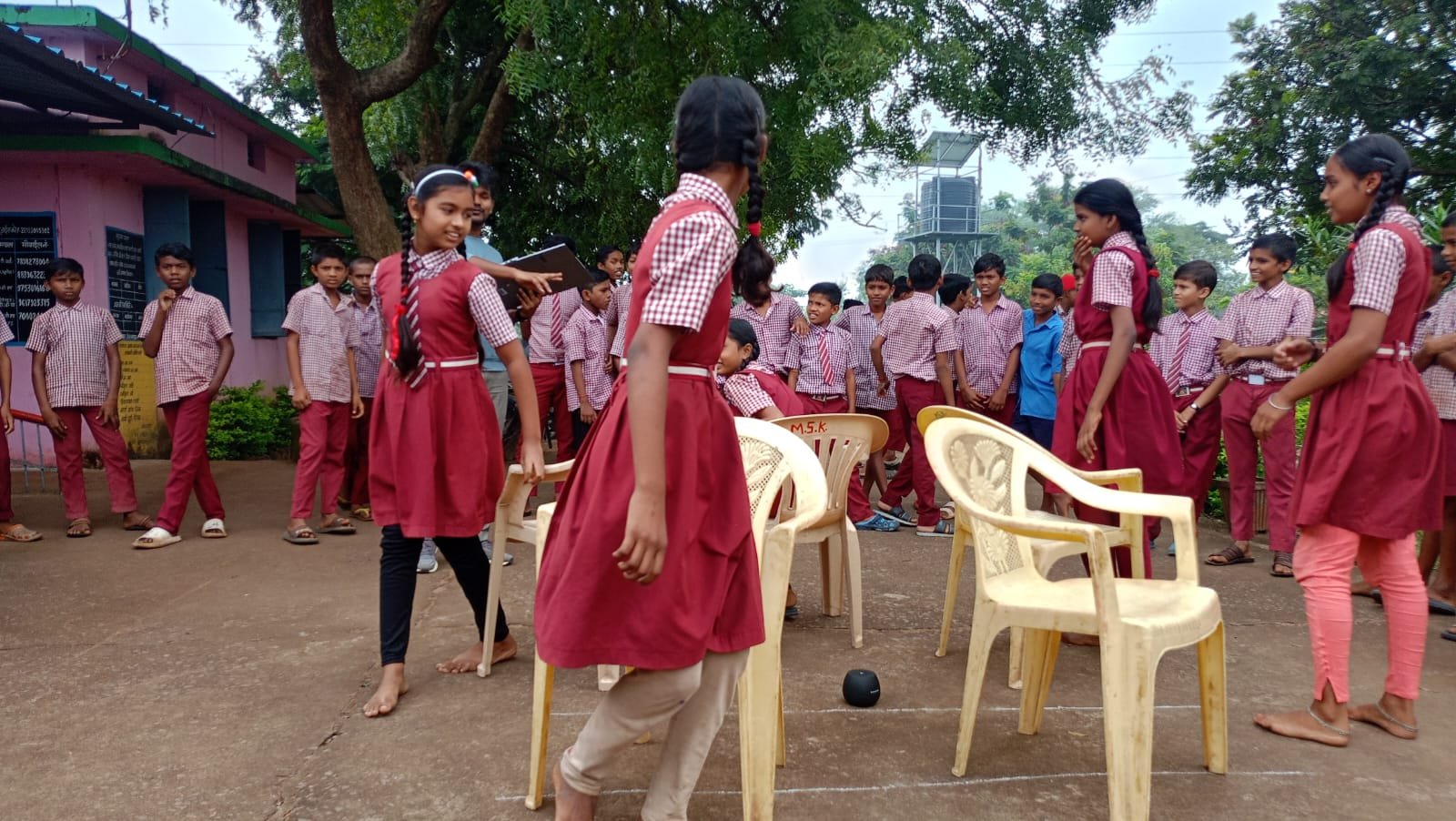
Image source: IncludiaTrust Media Library. Original creator attribution not available in current media record.
Section 3 Knowledge Check
- Why might the same resource not work equally well for every learner?
Answer: Learners differ in language, prior experience, access needs, confidence and pace. - Does inclusion require a completely separate resource for each learner?
Answer: Not always. Small thoughtful adaptations may remove barriers for many learners. - What is the purpose of visual or language scaffolds?
Answer: To make participation and understanding more accessible without removing the learning challenge. - What should guide a teacher’s adaptation?
Answer: Observed learner needs and the intended learning goal—not assumptions or labels.
1.8 How can a teacher evaluate a TLM?
Evaluation begins with observation. During the activity, look for what learners are doing—not only whether they are quiet or busy. Are they using the material to make a connection? Can they explain their choices? Are they asking relevant questions? Are misconceptions becoming visible? Do some learners remain excluded from the activity? These observations provide information that a teacher can use immediately.
After the lesson, compare the evidence with the objective. If the goal was to classify objects, did learners classify accurately and explain their criteria? If the goal was to understand a process, could they describe the stages and their relationship? If the goal was to practise vocabulary, did they use the words meaningfully rather than simply repeat them? This helps avoid equating activity completion with learning.
Evaluation should not be limited to the teacher’s judgement. Learners can explain what helped them, what confused them and what they would change. Their feedback may reveal that instructions were unclear, the material was difficult to handle, examples were unfamiliar or the task needed more time. A resource can be revised without treating the first attempt as a failure. Iterative design is part of teaching.
Teachers can keep a short record: objective, resource used, learner task, observations, evidence of learning, barrier noticed and one planned improvement. Over time, this builds a practical collection of materials accompanied by knowledge of when and how they work. A resource library is more valuable when it includes teacher notes than when it is simply a collection of attractive objects.
Section 4 Knowledge Check
- What is better evidence than simply seeing learners busy?
Answer: Learners explaining, applying, questioning or demonstrating understanding related to the objective. - What can a teacher do if the material does not work as intended?
Answer: Analyse what happened, identify barriers and revise the material or activity. - Why ask learners for feedback?
Answer: Their responses can reveal confusion, access barriers or improvements the teacher may not notice. - What should a useful resource-library entry include?
Answer: Its purpose, learner task, observations, evidence and suggested changes.
1.9 A practical planning framework
Use this brief planning sequence before making a resource. It is intentionally simple so it can be used during everyday lesson preparation.
Step 1—Identify the objective: Write what learners should be able to explain, demonstrate, compare, create or apply.
Step 2—Anticipate the difficulty: What may be abstract, unfamiliar, language-heavy or easy to misunderstand?
Step 3—Know your learners: Consider age, prior experience, language, confidence, access and the classroom context.
Step 4—Select the resource: Choose an object, visual, verbal prompt, model, digital resource or activity that directly supports the objective.
Step 5—Plan learner action: Decide what learners will do with the material. Avoid making the teacher the only active person.
Step 6—Check learning: Use an explanation, task, question, drawing, demonstration or application as evidence.
Step 7—Reflect and revise: Note what worked, what did not, who needed additional support and what you will change.
1.10 Chapter 1 reflection task
Select one topic you teach in the coming week. Do not make a material yet. First, write the objective in a sentence. Describe the likely difficulty learners may face. Identify one resource already available in your classroom, home or community. Plan what learners will do with it and how you will check their understanding. After teaching, record one observation that surprised you and one change you would make.
Chapter 01 · Understanding TLM
Make the material meaningful.
Before designing the next chart, model or worksheet, pause and ask: What will learners understand, practise or question because this resource is here? That question is the starting point of purposeful TLM.
Next: Chapter 02 — Designing TLM with Available Resources
Images used from the existing IncludiaTrust Media Library. Creator/source credits are not available in the current library metadata; no individual creator is claimed.
IncludiaTrust Learning Catalogue · New Courses
20 more courses for thoughtful educators
Explore practical courses on child well-being, inclusive teaching, classroom practice, subject pedagogy, assessment and reflective professional growth. Each course includes a classroom task and self-check questions. Course cards below are structured previews; full multi-chapter modules will be developed and published progressively.
Child Emotional Well-being & Psychological Safety
Recognise emotions, stress signals, classroom safety and supportive responses without diagnosing children.
Learning outcomes
- Identify key concepts and their implications for everyday teaching.
- Apply the approach to a real or realistic classroom situation.
- Use observation and reflection to evaluate and improve practice.
Quick MCQ 1
A child withdraws after a mistake. What is a first supportive response?
Correct response: Offer a calm, private check-in without public pressure.
Why: This option keeps decisions connected to learner needs, evidence and the intended learning purpose.
Quick MCQ 2
Why avoid labelling a child as lazy or attention-seeking?
Correct response: Such labels obscure context and may harm trust; observe behaviour and needs.
Why: A thoughtful teaching decision should be purposeful, inclusive and checked against what learners actually experience.
Child-Friendly Teaching: Trust & Professional Boundaries
Build respectful, approachable teacher–child relationships while maintaining fairness, safety and professional boundaries.
Learning outcomes
- Identify key concepts and their implications for everyday teaching.
- Apply the approach to a real or realistic classroom situation.
- Use observation and reflection to evaluate and improve practice.
Quick MCQ 1
Which approach builds trust while maintaining boundaries?
Correct response: Listen respectfully, explain expectations, and keep consistent professional boundaries.
Why: This option keeps decisions connected to learner needs, evidence and the intended learning purpose.
Quick MCQ 2
Does being friendly mean avoiding all rules?
Correct response: No. Warmth and clear, fair boundaries can coexist.
Why: A thoughtful teaching decision should be purposeful, inclusive and checked against what learners actually experience.
Inclusive Classroom & Individual Learning Needs
Identify barriers connected to language, access, pace, prior knowledge and classroom design; plan inclusive adjustments.
Learning outcomes
- Identify key concepts and their implications for everyday teaching.
- Apply the approach to a real or realistic classroom situation.
- Use observation and reflection to evaluate and improve practice.
Quick MCQ 1
What should guide an adaptation?
Correct response: Observed learner barriers and the shared learning objective.
Why: This option keeps decisions connected to learner needs, evidence and the intended learning purpose.
Quick MCQ 2
Does inclusion mean lowering the learning goal for every learner?
Correct response: No. Adjust access and support while preserving meaningful expectations.
Why: A thoughtful teaching decision should be purposeful, inclusive and checked against what learners actually experience.
Understanding Child Behaviour & Constructive Response
Explore behaviour in context—task difficulty, relationships, environment, unmet needs and regulation—and plan non-shaming responses.
Learning outcomes
- Identify key concepts and their implications for everyday teaching.
- Apply the approach to a real or realistic classroom situation.
- Use observation and reflection to evaluate and improve practice.
Quick MCQ 1
A learner repeatedly interrupts. What is useful before reacting?
Correct response: Observe context and patterns; identify triggers and teach an alternative behaviour.
Why: This option keeps decisions connected to learner needs, evidence and the intended learning purpose.
Quick MCQ 2
Is punishment alone a reliable explanation or solution?
Correct response: No; investigate context and use supportive, consistent responses.
Why: A thoughtful teaching decision should be purposeful, inclusive and checked against what learners actually experience.
Activity-Based Learning & Experiential Pedagogy
Plan purposeful activities where learners investigate, make, discuss, practise and explain—not merely stay busy.
Learning outcomes
- Identify key concepts and their implications for everyday teaching.
- Apply the approach to a real or realistic classroom situation.
- Use observation and reflection to evaluate and improve practice.
Quick MCQ 1
What makes an activity educationally purposeful?
Correct response: It aligns learner action with a goal and includes evidence of understanding.
Why: This option keeps decisions connected to learner needs, evidence and the intended learning purpose.
Quick MCQ 2
Is activity completion the same as learning?
Correct response: No; learners must demonstrate meaning, transfer or understanding.
Why: A thoughtful teaching decision should be purposeful, inclusive and checked against what learners actually experience.
Differentiated Instruction in Mixed-Ability Classrooms
Use flexible supports, scaffolds, choices and varied ways of showing learning without fixed labels.
Learning outcomes
- Identify key concepts and their implications for everyday teaching.
- Apply the approach to a real or realistic classroom situation.
- Use observation and reflection to evaluate and improve practice.
Quick MCQ 1
Differentiation begins from what?
Correct response: The objective and observed readiness, needs and barriers—not permanent labels.
Why: This option keeps decisions connected to learner needs, evidence and the intended learning purpose.
Quick MCQ 2
Must every learner receive a completely different worksheet?
Correct response: No; flexible supports and options may serve many learners.
Why: A thoughtful teaching decision should be purposeful, inclusive and checked against what learners actually experience.
Foundational Literacy: Reading Fluency & Comprehension
Support reading through modelling, repeated meaningful practice, vocabulary, questioning and comprehension monitoring.
Learning outcomes
- Identify key concepts and their implications for everyday teaching.
- Apply the approach to a real or realistic classroom situation.
- Use observation and reflection to evaluate and improve practice.
Quick MCQ 1
Fluency practice should focus on?
Correct response: Accurate, meaningful reading with phrasing and understanding—not speed alone.
Why: This option keeps decisions connected to learner needs, evidence and the intended learning purpose.
Quick MCQ 2
What is a useful comprehension check?
Correct response: Ask learners to explain, infer, retell or support an answer with text.
Why: A thoughtful teaching decision should be purposeful, inclusive and checked against what learners actually experience.
Language Teaching Through Conversation & Storytelling
Develop language through purposeful talk, narrative, listening, prompts, vocabulary in context and low-pressure participation.
Learning outcomes
- Identify key concepts and their implications for everyday teaching.
- Apply the approach to a real or realistic classroom situation.
- Use observation and reflection to evaluate and improve practice.
Quick MCQ 1
Which prompt supports speaking without giving the answer?
Correct response: An open question or sentence starter that invites a learner’s own idea.
Why: This option keeps decisions connected to learner needs, evidence and the intended learning purpose.
Quick MCQ 2
Should grammar always be isolated from meaningful language use?
Correct response: Not always; grammar can be noticed and practised within meaningful communication.
Why: A thoughtful teaching decision should be purposeful, inclusive and checked against what learners actually experience.
Teaching Mathematics with Manipulatives & Visual Models
Use counters, number lines, paper strips, grids and drawings to connect concrete action with mathematical representations.
Learning outcomes
- Identify key concepts and their implications for everyday teaching.
- Apply the approach to a real or realistic classroom situation.
- Use observation and reflection to evaluate and improve practice.
Quick MCQ 1
Why use manipulatives?
Correct response: To make relationships visible and support reasoning when connected to the concept.
Why: This option keeps decisions connected to learner needs, evidence and the intended learning purpose.
Quick MCQ 2
What should learners do after manipulating objects?
Correct response: Explain, represent or apply the mathematical idea, not just repeat the action.
Why: A thoughtful teaching decision should be purposeful, inclusive and checked against what learners actually experience.
Science Inquiry: Observation, Experiment & Evidence
Build classroom inquiry through questions, fair tests, careful observation, recording and evidence-based explanation.
Learning outcomes
- Identify key concepts and their implications for everyday teaching.
- Apply the approach to a real or realistic classroom situation.
- Use observation and reflection to evaluate and improve practice.
Quick MCQ 1
A scientific conclusion should be based on?
Correct response: Observations and evidence related to the question.
Why: This option keeps decisions connected to learner needs, evidence and the intended learning purpose.
Quick MCQ 2
Should learners be told the result before observing?
Correct response: Avoid pre-empting inquiry; support predictions and then compare them with evidence.
Why: A thoughtful teaching decision should be purposeful, inclusive and checked against what learners actually experience.
Classroom Assessment for Learning & Feedback
Use formative assessment to notice progress, misconceptions and next teaching steps; give actionable feedback.
Learning outcomes
- Identify key concepts and their implications for everyday teaching.
- Apply the approach to a real or realistic classroom situation.
- Use observation and reflection to evaluate and improve practice.
Quick MCQ 1
Effective feedback tells a learner?
Correct response: What is working, what needs improvement and a usable next step.
Why: This option keeps decisions connected to learner needs, evidence and the intended learning purpose.
Quick MCQ 2
Does a score alone explain how to improve?
Correct response: No; feedback should help learners understand their next action.
Why: A thoughtful teaching decision should be purposeful, inclusive and checked against what learners actually experience.
Lesson Planning: Objective, Activity & Assessment Alignment
Connect learning objectives, teaching strategies, learner actions, resources and assessment evidence in a practical plan.
Learning outcomes
- Identify key concepts and their implications for everyday teaching.
- Apply the approach to a real or realistic classroom situation.
- Use observation and reflection to evaluate and improve practice.
Quick MCQ 1
What should align in a lesson plan?
Correct response: Objective, learning activity and assessment evidence.
Why: This option keeps decisions connected to learner needs, evidence and the intended learning purpose.
Quick MCQ 2
Can an assessment test something never taught or practised?
Correct response: It should not; assessment should match intended and taught learning.
Why: A thoughtful teaching decision should be purposeful, inclusive and checked against what learners actually experience.
Positive Classroom Management & Routines
Create predictable routines, clear expectations, transitions, participation norms and restorative responses.
Learning outcomes
- Identify key concepts and their implications for everyday teaching.
- Apply the approach to a real or realistic classroom situation.
- Use observation and reflection to evaluate and improve practice.
Quick MCQ 1
Strong routines primarily support?
Correct response: Predictability, time, safety and learner independence.
Why: This option keeps decisions connected to learner needs, evidence and the intended learning purpose.
Quick MCQ 2
What is a constructive response to a disrupted routine?
Correct response: Teach/rehearse the routine and respond calmly and consistently.
Why: A thoughtful teaching decision should be purposeful, inclusive and checked against what learners actually experience.
Peer Learning & Cooperative Classroom Structures
Use structured collaboration with roles, individual accountability, shared goals and respectful dialogue.
Learning outcomes
- Identify key concepts and their implications for everyday teaching.
- Apply the approach to a real or realistic classroom situation.
- Use observation and reflection to evaluate and improve practice.
Quick MCQ 1
What prevents group work from becoming one learner doing everything?
Correct response: Clear roles and individual accountability.
Why: This option keeps decisions connected to learner needs, evidence and the intended learning purpose.
Quick MCQ 2
Is simply seating children in groups cooperative learning?
Correct response: No; collaboration needs a task structure and shared thinking.
Why: A thoughtful teaching decision should be purposeful, inclusive and checked against what learners actually experience.
Home–School Communication & Family Partnership
Communicate respectfully with families, share specific observations, listen to context and agree realistic next steps.
Learning outcomes
- Identify key concepts and their implications for everyday teaching.
- Apply the approach to a real or realistic classroom situation.
- Use observation and reflection to evaluate and improve practice.
Quick MCQ 1
A useful parent message should be?
Correct response: Specific, respectful, evidence-based and focused on collaboration.
Why: This option keeps decisions connected to learner needs, evidence and the intended learning purpose.
Quick MCQ 2
Should a teacher assume home circumstances from a child’s performance?
Correct response: No; ask respectfully and avoid unsupported assumptions.
Why: A thoughtful teaching decision should be purposeful, inclusive and checked against what learners actually experience.
Supporting Children with Disabilities: Accessible Teaching
Explore accessibility, participation, reasonable classroom adjustments, assistive resources and collaboration with support staff/families.
Learning outcomes
- Identify key concepts and their implications for everyday teaching.
- Apply the approach to a real or realistic classroom situation.
- Use observation and reflection to evaluate and improve practice.
Quick MCQ 1
What is the starting point for accessibility?
Correct response: Identify barriers in the task/environment and plan appropriate supports.
Why: This option keeps decisions connected to learner needs, evidence and the intended learning purpose.
Quick MCQ 2
Does accessibility mean a child must always work separately?
Correct response: No; plan participation and belonging in shared learning whenever appropriate.
Why: A thoughtful teaching decision should be purposeful, inclusive and checked against what learners actually experience.
Teacher Reflection & Professional Growth
Use evidence, reflective questions, peer dialogue and small improvement cycles to examine practice.
Learning outcomes
- Identify key concepts and their implications for everyday teaching.
- Apply the approach to a real or realistic classroom situation.
- Use observation and reflection to evaluate and improve practice.
Quick MCQ 1
Reflective practice should be based on?
Correct response: Concrete evidence and thoughtful analysis—not only impressions.
Why: This option keeps decisions connected to learner needs, evidence and the intended learning purpose.
Quick MCQ 2
What is a manageable improvement cycle?
Correct response: Try one change, observe its effect and refine it.
Why: A thoughtful teaching decision should be purposeful, inclusive and checked against what learners actually experience.
Digital Literacy & Responsible Classroom Technology
Select technology for pedagogical value; consider privacy, accessibility, distraction, reliability and digital citizenship.
Learning outcomes
- Identify key concepts and their implications for everyday teaching.
- Apply the approach to a real or realistic classroom situation.
- Use observation and reflection to evaluate and improve practice.
Quick MCQ 1
Technology is worth using when?
Correct response: It adds meaningful access, practice, feedback or representation aligned to the goal.
Why: This option keeps decisions connected to learner needs, evidence and the intended learning purpose.
Quick MCQ 2
Should learner data or photos be shared casually?
Correct response: No; protect privacy and obtain appropriate permissions.
Why: A thoughtful teaching decision should be purposeful, inclusive and checked against what learners actually experience.
Creative Arts, Visual Expression & Learning
Use drawing, collage, movement, drama, music and making to explore ideas and communicate meaning across subjects.
Learning outcomes
- Identify key concepts and their implications for everyday teaching.
- Apply the approach to a real or realistic classroom situation.
- Use observation and reflection to evaluate and improve practice.
Quick MCQ 1
Creative activity should connect to?
Correct response: A learning purpose, exploration and learner expression.
Why: This option keeps decisions connected to learner needs, evidence and the intended learning purpose.
Quick MCQ 2
How can a teacher assess creative learning fairly?
Correct response: Assess process, idea connection and reflection with clear criteria, not identical-looking products.
Why: A thoughtful teaching decision should be purposeful, inclusive and checked against what learners actually experience.
Education, Equity & the Hidden Curriculum
Explore how classroom language, rules, representation, expectations, resources and routines may create inclusion or exclusion.
Learning outcomes
- Identify key concepts and their implications for everyday teaching.
- Apply the approach to a real or realistic classroom situation.
- Use observation and reflection to evaluate and improve practice.
Quick MCQ 1
The hidden curriculum includes?
Correct response: Implicit messages communicated through routines, expectations, relationships and representation.
Why: This option keeps decisions connected to learner needs, evidence and the intended learning purpose.
Quick MCQ 2
What is a practical equity audit question?
Correct response: Who can participate easily, who faces barriers, and what change could reduce them?
Why: A thoughtful teaching decision should be purposeful, inclusive and checked against what learners actually experience.
These 20 courses are now part of the catalogue plan. Each course will be expanded into a full learning module with chapter readings, case examples, practical templates, section quizzes, answer explanations and end-of-course assessment before we mark it as fully developed.