Peer Learning as Resistance: Dismantling Teacher-Centric Authority in the Classroom
“To teach is not to transfer knowledge but to create the possibilities for the production or construction of it.” — Freire
1. Introduction: The Architecture of Control
The physical architecture of the traditional classroom tells a specific story about power. Rows of desks face a single point of authority: the teacher, the blackboard, and the podium. This arrangement is not accidental; it is a design feature of the “Banking Model” of education (Freire, 1970). In this model, knowledge flows in only one direction: vertically, from the teacher down to the student. The relationship between students is secondary, often discouraged as “distraction” or “noise.”
This structure creates a Dependency Culture. Students learn to wait for instructions, to seek validation only from the authority figure, and to view their peers not as collaborators, but as competitors for the teacher’s attention. In the Indian context, where reverence for the Guru is deeply ingrained, this dynamic often calcifies into a rigid hierarchy that mirrors the inequalities of the broader society. The classroom becomes a space of Silence and Compliance, rather than inquiry and debate.
However, if the goal of education is to prepare students for a democracy, then the classroom itself must be a democratic space. Democracy is not learned through lectures on the constitution; it is learned through the practice of negotiation, dialogue, and collective problem-solving. This brings us to the concept of Peer Learning.
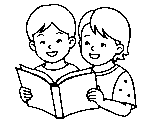
Peer learning is often dismissed as a “fun activity” or a break for the teacher. This article argues that it is, in fact, a radical act of Resistance. When students turn their desks to face each other, they physically and symbolically dismantle the monopoly of the teacher. They assert that knowledge can be constructed horizontally. They reclaim their agency as intellectual beings who can teach as well as learn.
2. Analysis: The Horizontal Revolution
The Theory: Vygotsky and the “More Knowledgeable Other”
Lev Vygotsky’s theory of Social Constructivism posits that learning happens in the Zone of Proximal Development (ZPD)—the space between what a learner can do alone and what they can do with help. Traditionally, the “help” is assumed to be an adult. However, research suggests that a peer is often a more effective scaffold than a teacher.
Why? Because peers share a “Cognitive Proximity.” They speak the same language, share the same cultural references, and struggle with similar misconceptions. When a student explains a concept to a peer, they do not just transfer information; they translate it into a shared dialect that the teacher may not possess. This interaction transforms the classroom from a collection of isolated individuals into a Community of Practice (Lave & Wenger, 1991).
The Political Act: Disputing the Monopoly on Truth
Jacques Rancière, in The Ignorant Schoolmaster, argued for the Equality of Intelligence. He suggested that the conventional explication (the teacher explaining to the student) actually stultifies the mind because it assumes the student is incapable of understanding without the master.
When we implement peer learning, we operationalize Rancière’s radical equality. We tell the students: “You are capable of making sense of this world together.”
“The teacher is no longer the merely-the-one-who-teaches, but one who is himself taught in dialogue with the students.” — Paulo Freire.
Consider the “Think-Pair-Share” strategy. A question is posed. Instead of the quickest hand going up (privileging speed and confidence), everyone thinks. Then everyone talks to a neighbor. Then the class shares. In the “Pair” stage, the quiet student, the marginalized student, and the slow processor all have a voice. The classroom volume rises—a phenomenon often feared by authoritarian administrators—but this noise is the sound of Cognitive Labor. It is the sound of democracy at work.
Structural Implementation: The Jigsaw Method
How do we ensure peer learning doesn’t devolve into chaos? We need Structured Interdependence. A prime example is Elliot Aronson’s Jigsaw Classroom.
In a Jigsaw setup, the material is divided into four parts. Each student in a group is assigned one part. They become “experts” in that part by meeting with peers from other groups who have the same assignment. Then, they return to their home group and teach their part to their teammates.
In this structure, the only way to succeed is to listen to your peer. The “expert” on the caste system might be a Dalit student; the “expert” on agrarian policy might be a farmer’s child. This method does not just teach content; it Validates Lived Experience and forces students to depend on one another. It breaks down prejudices not through moral lectures, but through the necessity of cooperation.
The Challenges of Resistance
We must acknowledge that dismantling authority is painful. Students conditioned by the Rote System may resist peer learning. They may say, “Teacher, just tell us the answer.” They may view group work as a waste of time. Parents may view a noisy classroom as an undisciplined one.
Furthermore, without careful facilitation, peer groups can replicate societal hierarchies—boys talking over girls, upper-caste students dominating lower-caste students. This is where the teacher’s role shifts from “Sage” to “Facilitator.” The teacher observes, intervenes to ensure equity, and scaffolds the social skills required for dialogue. The teacher does not abdicate authority; they redistribute it.
3. Conclusion: The Classroom as Agora
The shift from teacher-centric instruction to peer learning is not merely a change in technique; it is a shift in the Epistemology of Schooling. It moves us away from the idea that knowledge is a commodity owned by the teacher and dispensed to the student. Instead, it posits that knowledge is a social construct, created through the friction of differing viewpoints.
In a diverse society like India, the classroom is often the only place where children from different backgrounds meet as equals. If we force them to sit in silence, we squander this opportunity. But if we allow them to talk, to argue, to teach, and to learn from one another, we transform the classroom into an Agora—a public space of assembly.
For the marginalized child, peer learning is an assertion of worth. For the privileged child, it is a lesson in listening. By dismantling the singular authority of the teacher, we prepare students for a world where truth is complex, where authority must be earned, and where we are all, ultimately, interdependent.
Let the classroom be noisy. Let the desks be turned. Let the resistance begin with a simple instruction: “Turn to your neighbor and discuss.”