
Desktop Mode Popup
Includia Trust | Direct Impact Portal

The Living School

Categories: Education
Wishlist Share
Share Course
Page Link
Share On Social Media

About Course

Schools are more than physical structures; they are dynamic, complex organizations shaped by the socio-political and economic realities of India. This course, “The Living School,” is a transformative professional development journey designed to bridge the gap between academic research and the ground reality of classrooms. Anchored in the philosophy of “Learning, Belonging, Becoming,” the curriculum empowers educators to recognize and protect the “Sovereignty of the Child” in every learner.

The journey begins by providing conceptual tools to analyze schools as unique entities. You will explore how vision, mission, and identity are interlinked to determine organizational effectiveness and student learning. Participants will examine the pivotal role of the head teacher in building a shared understanding of pedagogical practices, academic planning, and teacher development. The course moves deep into the “soul” of the school—its culture—teaching you how to utilize rituals, ceremonies, and communication flows to foster a sanctuary of inclusion, autonomy, and well-being.

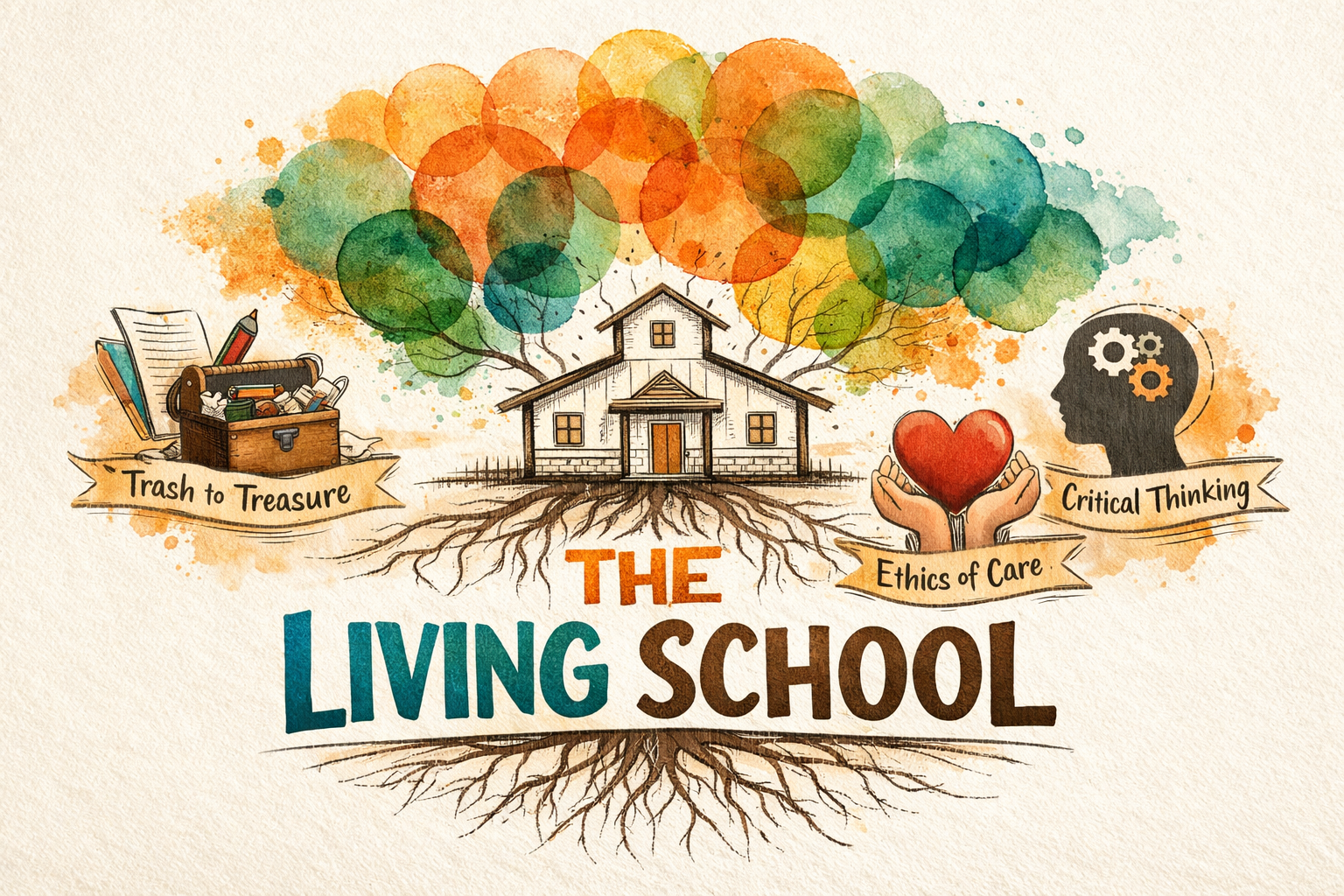
Practical mastery is a core pillar. You will learn to navigate administrative complexities, including budgeting models and legal frameworks, such as state education acts, ensuring that administrative tasks directly support academic goals. By integrating unique Includia Trust methodologies—such as “Trash to Treasure” for creating low-cost teaching aids and the “Healing Staircase” for social-emotional support—this course transforms teachers into critical researchers.

Ultimately, you will graduate with a personalized School Development Plan, equipped to intervene in your school system and initiate lasting, inclusive change. This is not just a course; it is an invitation to organize equity and reclaim the beauty of learning for every student.

Show More

What Will You Learn?

  • Transform "Factory" Schools into Living Organisms: Master the ability to see your school as an "Open System" that breathes and adapts to the local social, political, and economic context.
  • Design "Trash to Treasure" Learning Materials: Learn to create high-quality, zero-cost Teaching-Learning Materials (TLMs) using local waste, implementing "Contextual Scaffolding" to make abstract concepts concrete.
  • Become an Instructional Leader: Shift your role from an "administrator of files" to a "leader of pedagogy," capable of guiding teachers and improving the instructional core.
  • Deconstruct the "Hidden Curriculum": Acquire the forensic skills to analyze textbooks for bias (invisibility, stereotyping) and create "Counter-Narratives" that empower marginalized students.
  • Implement the "Ethics of Care": Build a "Healing Staircase" within your school—a culture of safety and belonging that supports the socio-emotional sovereignty of every child.
  • Navigate Assessment as a GPS: Move beyond "Red Pen Violence." Learn to use Formative Assessment and Holistic Progress Cards (HPC) to navigate learning rather than just judging it.
  • Create a School Development Plan: Capstone project—formulate a realistic, actionable plan to intervene in your specific school context and drive systemic change.

Course Content

The Living School: A Masterclass in Human-Centric Pedagogy & Organization
In an era of standardized metrics, we often forget that a school is not just a collection of classrooms, but a breathing, living organization influenced by the social, political, and cultural heartbeat of its community. This course is designed to transform educators into visionaries who can bridge the gap between abstract academic research and the vibrant ground reality of Indian classrooms. Grounded in the philosophy of "Learning, Belonging, and Becoming," we move beyond the "banking model" of education to recognize the Sovereignty of the Child in every marginalized student. Participants will embark on a 15-week journey to deconstruct the "hidden curriculum" and reconstruct schools as sanctuaries of depth. You will learn to use conceptual tools to analyze vision and identity, master the art of distributed leadership, and foster a school culture rooted in the Ethics of Care. By integrating Includia Trust’s signature methodologies—such as "Trash to Treasure" for sustainable teaching aids and the "Healing Staircase" for socio-emotional well-being—you will gain the agency to design inclusive environments where every child can learn everything. This course culminates in the creation of a School Development Plan, empowering you to intervene in systemic structures and lead with purpose. Whether navigating the complexities of the state education acts or building a Print-Rich Sanctuary, you will graduate as a "Teacher-as-Researcher," ready to influence change and empower lives. The Curriculum Structure Module 1: The Soul of the Organization (Weeks 1–4) Concepts of the "Open System": Analyzing schools as unique entities influenced by their local environment. Vision & Mission Mapping: Translating educational aims into effective organizational structures. Identity & Power: Understanding the interlinkages between norms, culture, and the people who drive the system. The Ethics of Care: Exploring how inclusive practices and equity form the foundation of a democratic school. 🎨 Thinkable Question: If your school's vision was a living person, how would it treat a child from the most marginalized home? Module 2: Pedagogical Agency & Contextual Learning (Weeks 5–8) Instructional Leadership: Redefining the role of the head teacher as a builder of shared understanding and vision. Trash to Treasure (TLMs): Creating high-quality, low-cost teaching-learning materials from local resources to bridge the abstract and the concrete. Deconstructing the Textbook: Analyzing curriculum materials to identify biases and reclaim pedagogical agency. Professional Communities: Fostering collaborative practices among teachers to improve student learning and teacher development. Module 3: Shaping Culture & Well-being (Weeks 9–11) The Anatomy of Culture: Examining rituals, ceremonies, and communication flows within the school organization. The Healing Staircase (SEL): Integrating social-emotional learning into the physical and social architecture of the school. Print-Rich Strategies: Transforming walls and spaces into active, contextual teachers that promote student agency. Hierarchy & Autonomy: Understanding how power relationships and decision-making impact school effectiveness. 🌟 Thinkable Question: How do the "silent rituals" of your school—like the morning assembly or lunch break—either reinforce hierarchy or build belonging? Module 4: Stewardship, Resources & Community (Weeks 12–15) Budgeting for Impact: Learning to align administrative tasks and financial resources with academic goals. Legal Frameworks & Rights: Navigating the state education acts and understanding the duties of management committees. Community Participation: Strengthening the bond between the school, parents, and local authorities to ensure transparency. Capstones: Developing a comprehensive School Development Plan focused on inclusion and effectiveness. What You Will Master Organizational Analysis: The ability to evaluate and intervene in school systems through a critical lens. Resource Management: Skills to manage infrastructure, finances, and staffing in alignment with the school’s mission. Inclusive Pedagogy: Designing learning experiences that cater to neurodiverse and marginalized learners. Strategic Leadership: Formulating plans that balance administrative efficiency with an unwavering commitment to the child.

  • The Anatomy of a School: From Factory to Organism
  • Module 1 Assessment: The Soul of the Organization
  • Module 2: Managing Pedagogy & Contextual Learning.
  • Final Assessment

Student Ratings & Reviews

No Review Yet
No Review Yet
Verified by MonsterInsights