
When we discuss participation, we often begin by asking whether a learner is willing to answer, whether they are attentive, or whether they are confident enough to speak. These questions matter, but they place the first responsibility on the learner. Another useful question is about the task itself: what makes it possible—or difficult—for a student to begin?
A task can have a clear purpose and still be difficult to enter. Instructions may be long, the example may assume prior knowledge, materials may be unfamiliar, or the only expected response may be a complete written answer. A student who is unsure of the first step may appear disengaged even when they are trying to understand.
Keep the learning goal; vary the doorway
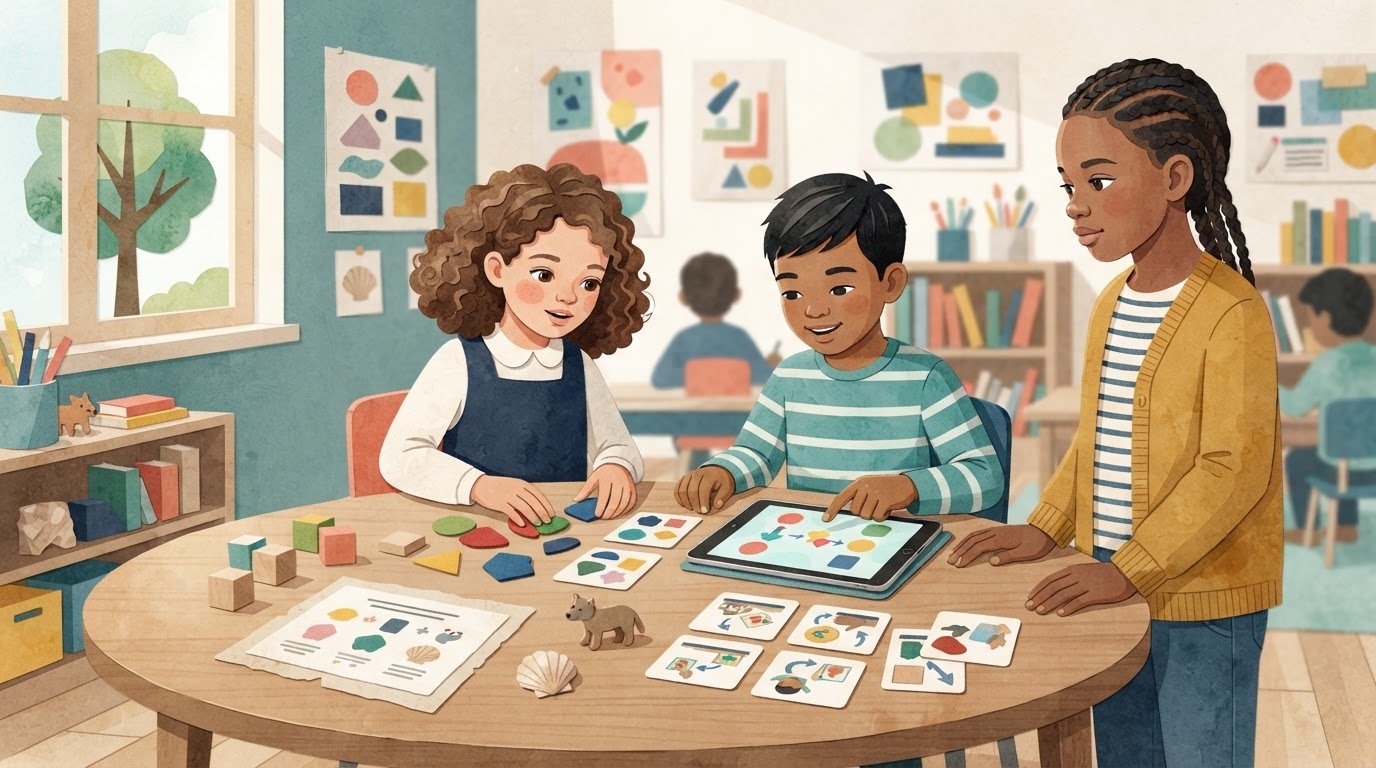
Designing entry points does not mean giving every learner a different lesson or lowering expectations. The central learning goal can remain common. The way students begin can vary. A short picture, a worked example, a familiar object, a pair discussion, a question card, or a partly completed diagram may help a learner approach the same concept.
For example, if the goal is to explain why a community needs rules, students could first examine a familiar situation, identify what is unfair, compare two short cases, or write a question before composing a fuller explanation. These are not separate goals. They are different routes towards reasoning about the same idea. Support should open the thinking, not replace it.
What an entry point should—and should not—do
An entry point gives a learner something meaningful to work with. It should not become a permanent simplified version of the task. Once a student begins, the teacher can gradually invite more complex thinking: explain a choice, connect evidence, compare viewpoints, or revise an initial answer. This keeps support connected to growth rather than labelling ability.
It is also worth checking whether our entry points are respectful. A student should not have to publicly announce a difficulty or receive a visibly different worksheet every time. Choices can be offered to the whole class. Quiet supports such as vocabulary cards, visual steps, or partner rehearsal may be available without turning assistance into a spectacle.
Before the lesson, check: Is the first step clear? Is there an example or concrete clue? Can a learner begin without waiting for individual help? Is there more than one way to contribute? What will the task ask them to think about after they begin?
Observe the entry, not just the final answer
Teachers can learn from how learners start. Who immediately finds a way in? Who waits? Who asks for clarification? Which materials are used? These observations are more useful than quickly interpreting hesitation as a lack of effort. The first attempt can help us redesign tomorrow’s task.
Questions for reflection
- Where do learners usually get stuck before the thinking even begins?
- Could a picture, example, discussion, or short prompt make the first step more accessible?
- Are the supports available without publicly separating learners?
- After the first step, how do we extend reasoning for everyone?
Participation is not simply a quality a child brings into the room. It is shaped by the opportunities the room provides. When we design a task with more than one doorway, we are not making learning easier in a superficial sense. We are making it more possible for learners to reach the demanding part—the part where they question, explain, connect, and think for themselves.