
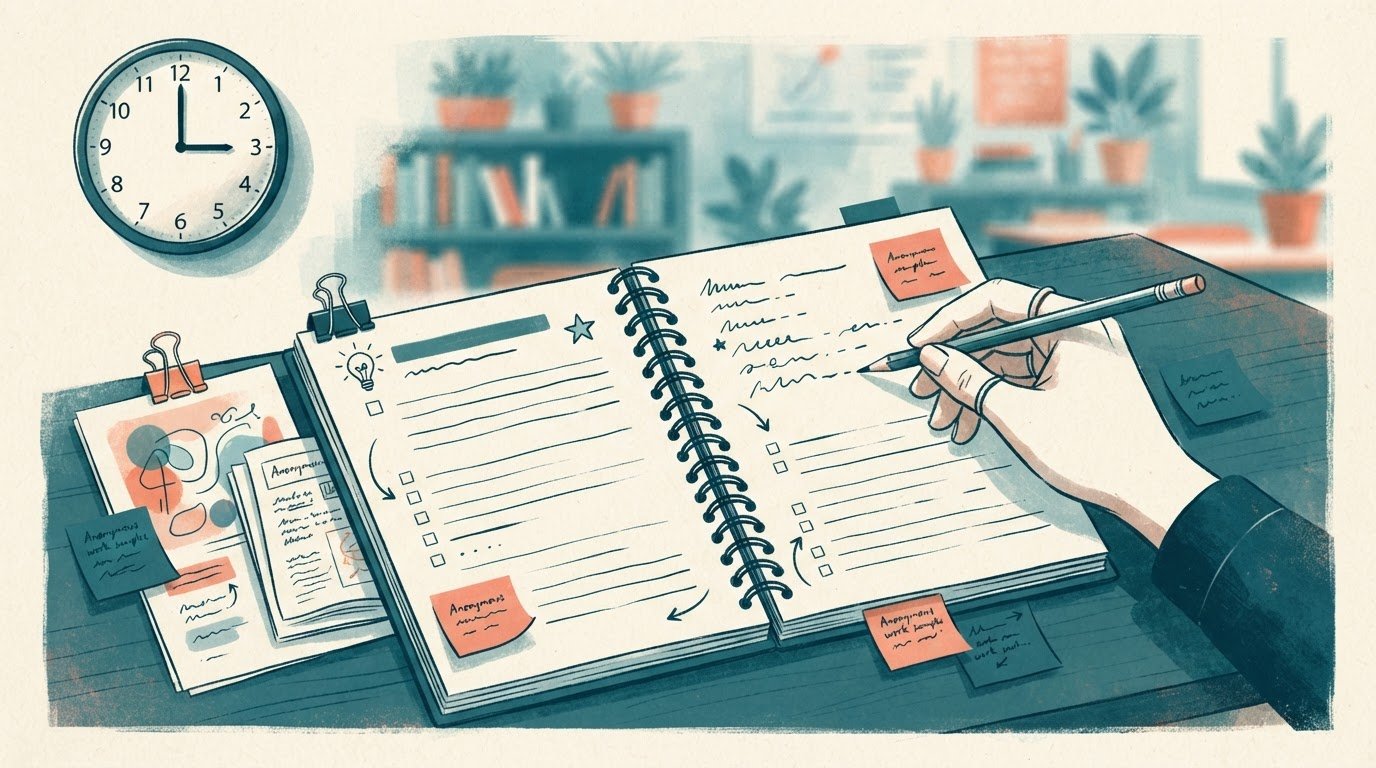
Classrooms move quickly. A student does not begin a task, looks away during an explanation, finishes early, asks for help, or changes a response. Teachers have to make decisions in the moment. We often interpret what we see almost immediately: “not interested,” “confident,” “careless,” “needs more practice,” or “does not understand.” These interpretations may be reasonable, but they are not the same as observation.
A useful observation begins with what can be described before deciding what it means. This small distinction can help us avoid turning one moment into a permanent judgement about a learner. It can also give us better evidence for deciding what to teach next.
Separate the visible action from the explanation
Imagine a hypothetical classroom note: “After the instructions were given, the learner looked at the page for several minutes, asked what one word meant, and began drawing a diagram after an example was shown.” This describes actions. It does not claim the learner was lazy, confused about the entire topic, or incapable of writing. Those interpretations may be explored later, but the observation itself leaves room for more than one explanation.
Another note might record: “The student completed the first two items independently, then checked the worked example before attempting the third.” This could lead to a question about whether the example supports independence or whether a new step is needed. The purpose is not to monitor children constantly. It is to collect small, relevant observations that help teaching decisions.
A simple three-column record
- What I noticed: describe an action, response, question, or pattern without judgemental labels.
- What I am wondering: write a possible explanation as a question, not a conclusion.
- What I will try: identify a next step, support, prompt, or opportunity to check understanding.
Keep the note short. A specific observation is more useful than a broad label; a question keeps interpretation open; a next step makes the note relevant to teaching.
Notice patterns, not isolated moments
One observation may be misleading. A learner’s behaviour can change with the task, time, language, peer arrangement, instructions, fatigue, or many other conditions. If the same pattern appears across different activities, it may be worth exploring more carefully. Even then, the teacher should avoid claiming certainty without evidence. Ask the learner, compare work samples, or adjust one part of the task and see what happens.
Observation notes should also protect privacy. Avoid recording unnecessary personal details, sharing notes casually, or using them to label students publicly. The record should be purposeful, respectful, and connected to learning. A small notebook can be more valuable than a long list of comments if it helps a teacher notice what is actually happening.
Questions for reflective practice
- What did I see or hear, exactly?
- Which part of my note is an interpretation?
- What alternative explanation might fit the same observation?
- What small change could help me check my understanding?
- What would the learner say about this moment?
Teaching requires interpretation, but interpretation becomes stronger when it is grounded in careful observation. The notebook is not a record of student faults. It is a tool for teachers to slow down their assumptions, recognise context, and respond with more precise support. When we describe before we judge, we leave more room for learners to be understood—and for our own practice to improve.