Words That Shape a Child
A classroom is not only a place where children learn subjects. It is also a place where they slowly learn who they are. Every word spoken by a teacher can become a small part of a student’s inner voice.
A child may forget a lesson from the textbook, but may remember for years how a teacher made them feel.
🏷️ The Hidden Power of Labels
Words such as “lazy”, “stupid”, “naughty” or “good for nothing” may sometimes be spoken casually. But for a developing child, repeated labels can become much more than words.
When a student repeatedly hears a negative description, they may begin to believe that the description represents their identity, rather than recognising it as feedback about a particular behaviour.
Saying “You made a poor choice” is very different from saying “You are a bad child.” One corrects behaviour. The other can attack identity.
🧠 What Can Happen Inside the Classroom?
Constant criticism can make some students increasingly afraid of making mistakes. They may stop raising their hands, hesitate before speaking, avoid participating in discussions, or choose silence even when they know the answer.
Over time, a child who was once expressive and enthusiastic may become noticeably quieter. Sometimes, fear of judgement becomes stronger than the desire to participate.
The goal is to create discipline without destroying confidence, curiosity and dignity .
⚖️ The Teacher’s Balance
Good teaching does not mean allowing everything. Children need boundaries, structure and accountability. But they also need to know that making a mistake does not make them a mistake.
🤝 A Classroom Can Become a Community
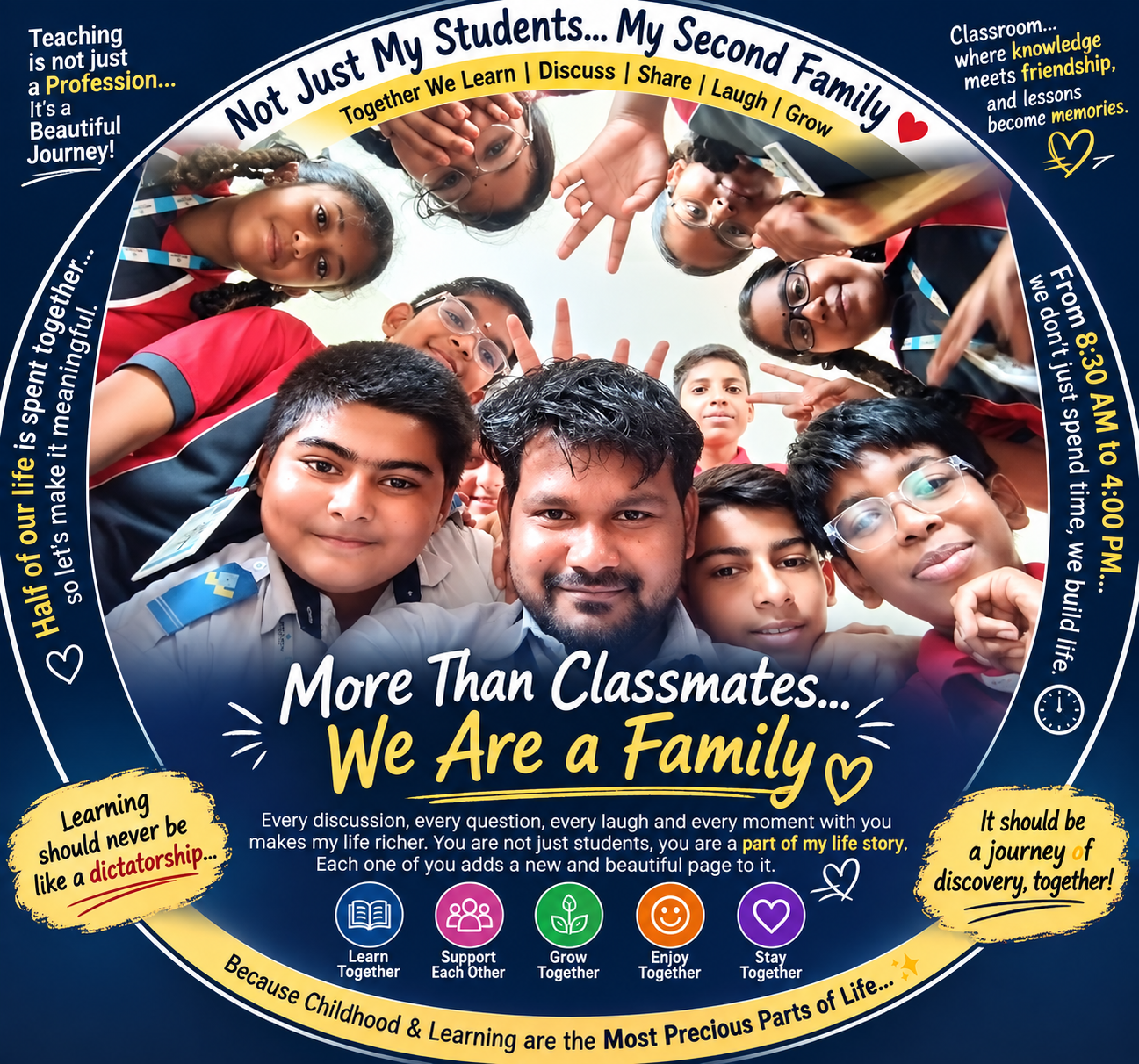
Students and teachers spend a significant part of their lives together. School hours are not merely hours between home and home. They are years filled with conversations, friendships, disagreements, discoveries, laughter and memories.
A classroom should therefore become a space where students can ask, question, disagree, laugh, try, fail and try again .
The strongest classroom is not the one where every child is silent. It is the one where every child feels safe enough to speak.
❤️ Teach the Child, Not Just the Behaviour
A teacher’s responsibility is not simply to complete a syllabus. It is also to help young people develop confidence, emotional awareness, communication skills and the courage to participate in the world around them.
Before using a label, pause for a moment and ask: “Will these words help this child grow?”
Because sometimes, the most powerful lesson a teacher gives is not written on the board — it is felt in the heart.
Note: This article draws on established ideas from educational psychology, including teacher expectations, self-concept, social-emotional learning, psychological safety and the effects of feedback on student motivation. The effects of labels are not identical for every child; relationships, context and individual differences matter.